

“It is better to stand and fight. If you run, you’ll only die tired.”
~ Viking saying
Yesterday morning one of my “Bers-HERC-ers” tipped me off that a couple of trolls were wailing and gnashing their teeth about me in another Facebook group.
For the uninitiated: Bers-HERC-er = Berserker of the HERC Horde.
I happened to capture a rare picture of one of them in the wild:
It looks like he’s dealing with a low-ball offer from one of his clients. Best leave him be.
The troll in question was screenshotting one of my company’s cold outreach emails and mocking it in another group. We’d had the temerity to send him a prospecting email. The audacity.
Most people in this situation would rush into the comments to defend themselves. Or worse, apologize and reroute their strategy because a keyboard warrior had opinions.
Not me. I rubbed my hands together.
The Three Rules
If you read Part One, you know Rule One (don’t debate them directly) and Rule Two (look at the hard data). Here’s Rule Three:
Never name them.
Not by name, not by handle, not by any identifier that gives them the recognition they’re fishing for. The story works fine without them in it. Naming them turns a teachable moment into a catfight.
The move is to use the trolling without amplifying the troll.
How Conflict Becomes Currency
Here’s the mechanism, spelled out plainly:
Trolls create conflict. Conflict creates engagement. And if you play it right, engagement creates two things: fun and profit.

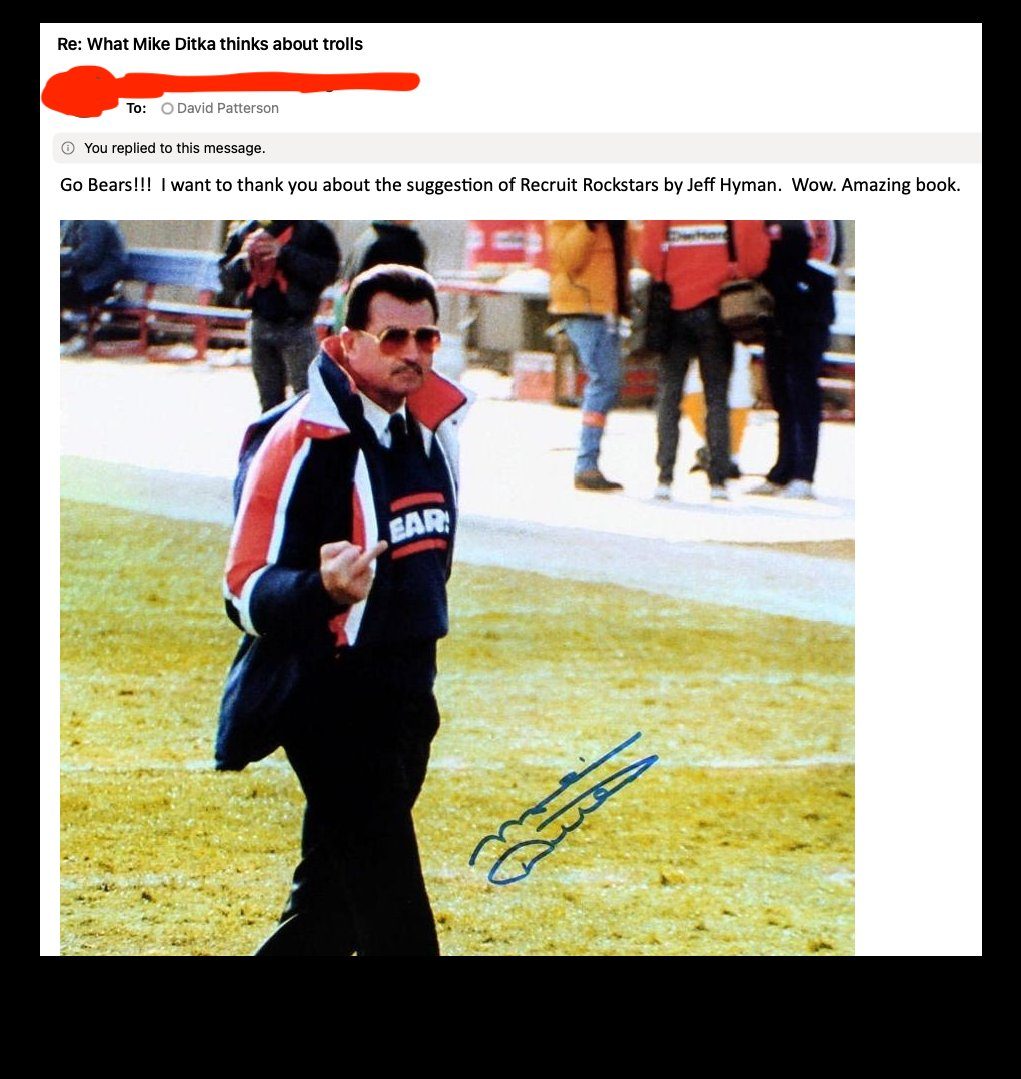
The email I sent the day before, the one about what Mike Ditka thinks about critics, generated two discovery calls. Not because I went on defense. Because I wrote about my highest-performing outreach sequence, explained why it works, and let the troll’s tantrum be the hook that got people reading.
The fun part? One of my Bers-HERCers replied to that email with a signed Ditka photo and a “Go Bears.” The profit part? Two calls booked from people who liked how I handled it.
That’s the math. Troll shows up, I write an email, pipeline grows.
Why Shining a Light Works
There’s a persuasion principle I keep coming back to. People will do almost anything for those who:
- Encourage their dreams
- Justify their failures
- Allay their fears
- Confirm their suspicions
- Help them throw rocks at their enemies
That last one is the relevant one here.
When you shine a light on behavior your audience already finds irritating, you’re not just creating content. You’re creating community. You’re giving the people who think like you something to rally around.

Case in point. Here’s a post I put up a while back about a hiring manager who got indignant when I refused to send him redacted resumes:
<img src=“/images/articles/trolls-linkedin-post.jpg” alt=“LinkedIn post from David Stephen Patterson: “#Recruiters STOP sending REDACTED resumes to prospects"" class=“img-screenshot” />
Notice what I didn’t do: name him. I took the situation, turned it into a teaching moment about ethics and positioning, and let my audience engage with the idea instead of the person.
The post got engagement. It attracted people who share those values. It repelled people who don’t.
That’s the whole point.
The Nuanced Take
I get it. Not everyone is going to go full Viking on their trolls.
Your audience is probably more professional than the average HERC crowd. Your prospects are hiring managers and C-suite executives, not a horde of independent recruiters who enjoy a good scrap.

So here’s the version that works for everyone, even the polished and professional among you:
You don’t have to call out trolls directly. But you can absolutely use friction to create content.
A client pushes back on your fees? Write about why recruiters undercharge and what it costs them.
A hiring manager insists on contingency only? Write about the real economics of contingency search.
Someone tells you cold email is dead? Write about why that belief is exactly what’s keeping them stuck.
You’re not naming anyone. You’re not stirring drama. You’re taking real friction from your world and turning it into content that your ideal clients will recognize and respond to.

Every time someone pushes back on what you’re doing, they’re handing you a gift. The question is whether you know what to do with it.
The recruiters who get trolled are the ones building things worth noticing. The ones who sail through completely unbothered are usually the ones no one’s paying attention to.
I’ll take the trolls.